- Personal project · travel PWA
Wayfolio
- Nuxt 4, Vue 3, TypeScript, Pinia, Zod, MapLibre GL, Turf.js, GSAP, mediabunny, IndexedDB, PostgreSQL (Neon), Cloudflare R2, PWA, Web Push, Vitest, GitHub Actions, Vercel
- Personal project · frontend and backend
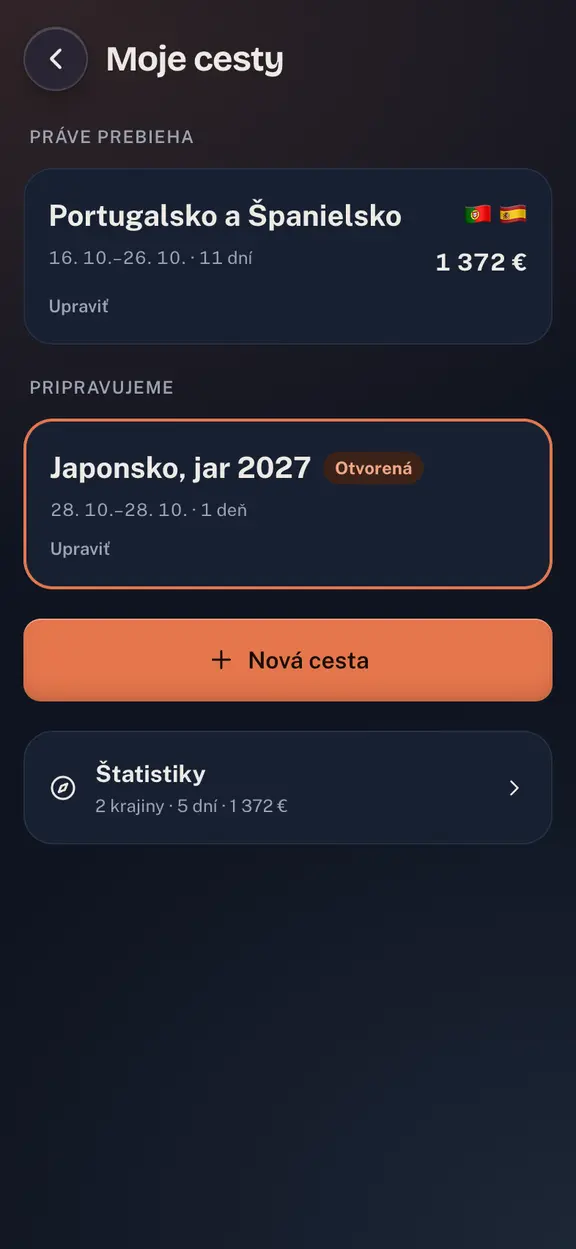
A web app I built for travelling. It brings together everything that belongs to a trip: the itinerary, bookings, expenses and animated route videos from the map. Two of us use it on a shared trip, and it installs as a PWA.
It exists because on our trips we used four different apps: one for planning the days, one for managing bookings, one for logging expenses and one for making a final video of the trip. Some things in them we couldn't use well for free, and the features we wanted were on paid plans, so I built one app that brings all four together. I don't have to pay for anything, it's made for exactly our needs and is easy to extend.
We use it every day on our trips, and I keep extending it with whatever we miss. The latest additions are flight delay and cancellation alerts, bookings from a screenshot via Claude, a daily overview with a countdown to departure and the weather, place photos, flight imports from Flighty and itinerary imports from Stippl, and documents synced between devices.
Scope of work
- Offline-first: data lives in the browser (IndexedDB) and syncs to Postgres in the background. Changes wait in a queue (an outbox) and go out record by record, not trip by trip, so if one of us adds a coffee while the other edits a hotel, nothing gets overwritten. When the same record is edited concurrently, the newer write wins, and a record the server rejects is logged instead of being resent forever
- Documents and photos across devices: files go to Cloudflare R2, and the browser uploads them directly through a short-lived signed URL, so they never pass through the serverless function with its 4.5 MB limit. An attachment record syncs only once its file is uploaded, so no device ever gets a document it can't open. Missing files are downloaded straight away, not when opened, so tickets are at hand offline too. Photos are downscaled in the browser before saving
- Push notifications: booking reminders, an alert when a flight is delayed or cancelled, and a message on the other device when someone adds an expense (several expenses at once are merged into one message, and the device that added it is not notified). The free flight API allows 100 calls a month, so the server checks a flight only in a window around departure, and more often only once it knows the airport's time zone, which comes to about 6 calls per flight. The flight number is read from the booking title, and the ticket shows the last known status, the airline and a Flightradar24 link
- Bookings from a screenshot: the app offers an instruction for a claude.ai project, Claude turns a screenshot of a flight or a stay into JSON, and the form is filled in from it. Filled-in fields stay highlighted until I've checked them
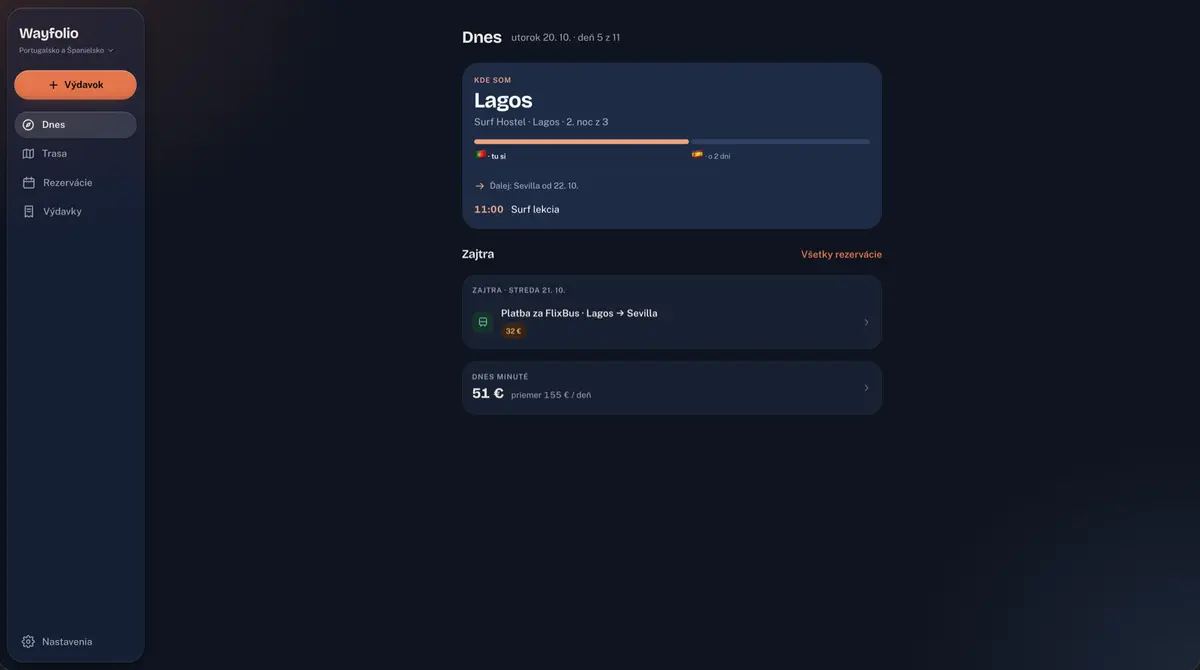
- Overview of the day: before the trip a countdown to departure with the next booking and payments that are coming due, during the trip where I am or where I'm travelling. The programme and bookings in a logical order (check-out, transfer, check-in, even when the times say otherwise), documents for today's bookings at hand, and the weather here and at the next stop (Open-Meteo, cached for an hour)
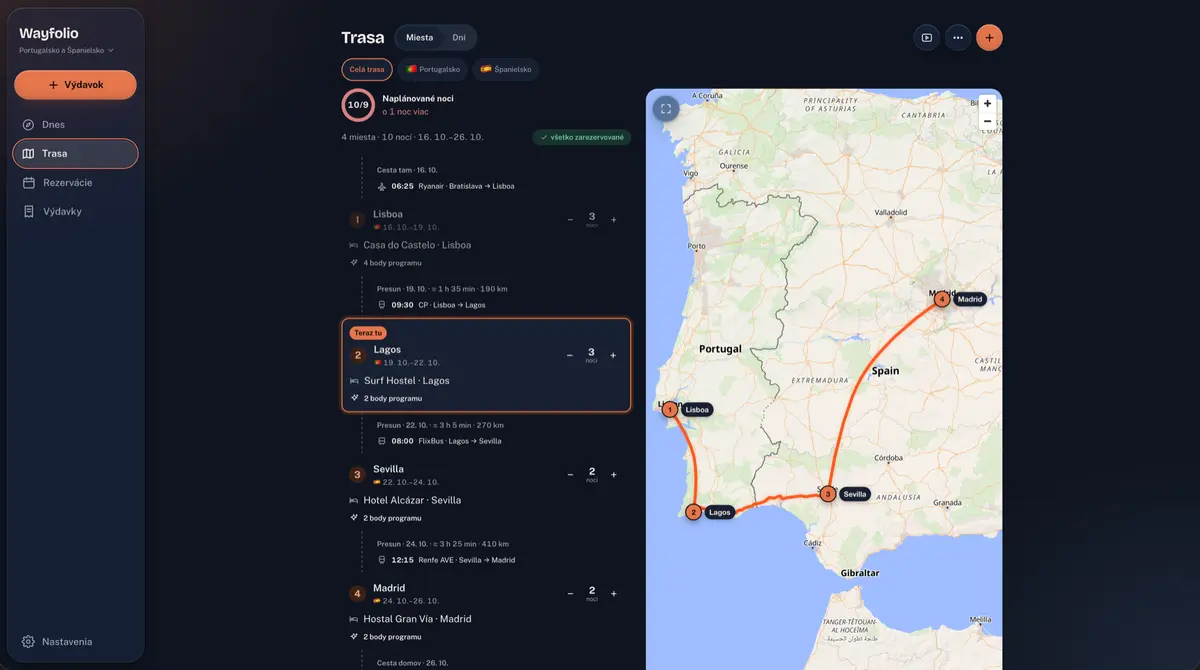
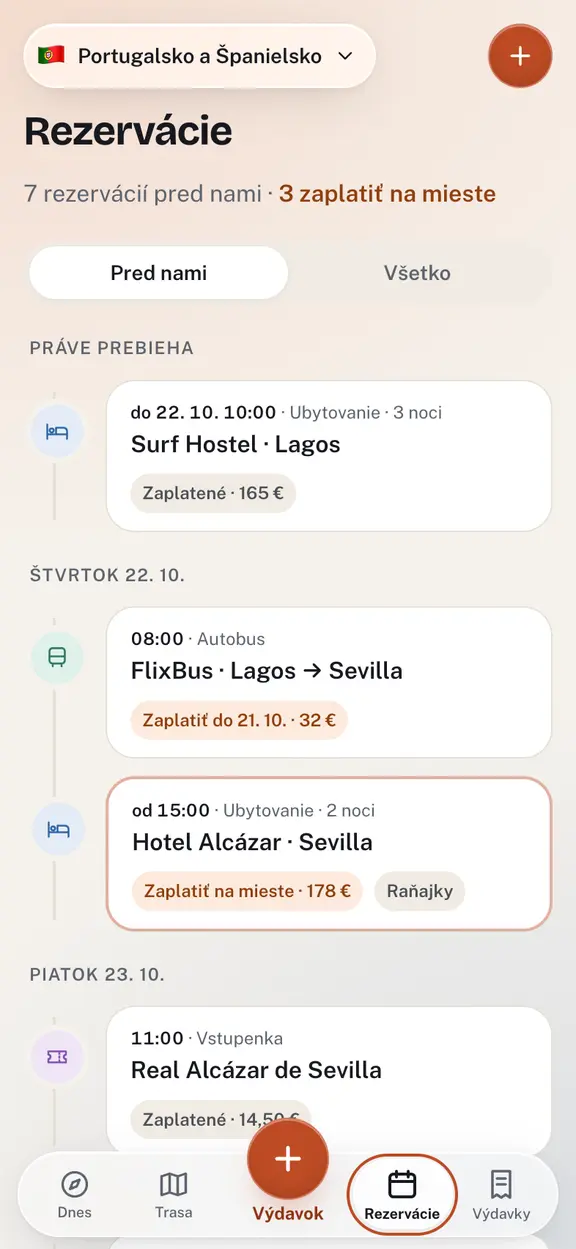
- Bookings for flights, trains, buses, ferries, cars, accommodation and tickets. One booking can have several payments, and the price is also shown converted to the home currency. The city is filled in automatically, and the form can open an accommodation search on Agoda or a flight search on Kiwi.com with the city and dates already filled in. Trains and buses list their stops and show the position on the line from the timetable and the phone's clock, and the detail has a map of the route
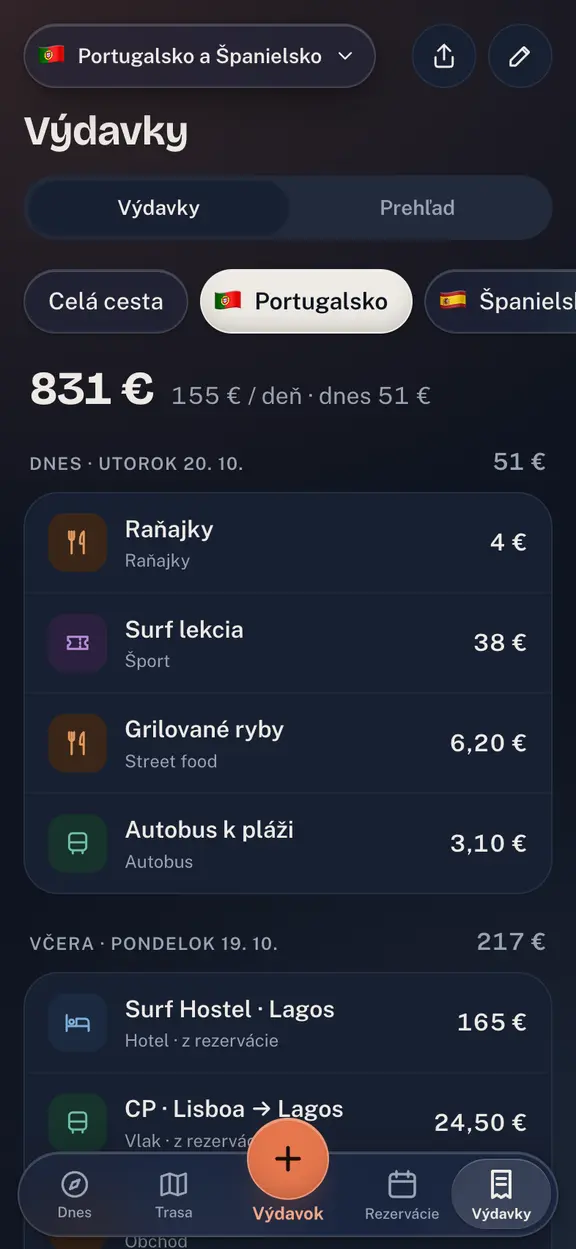
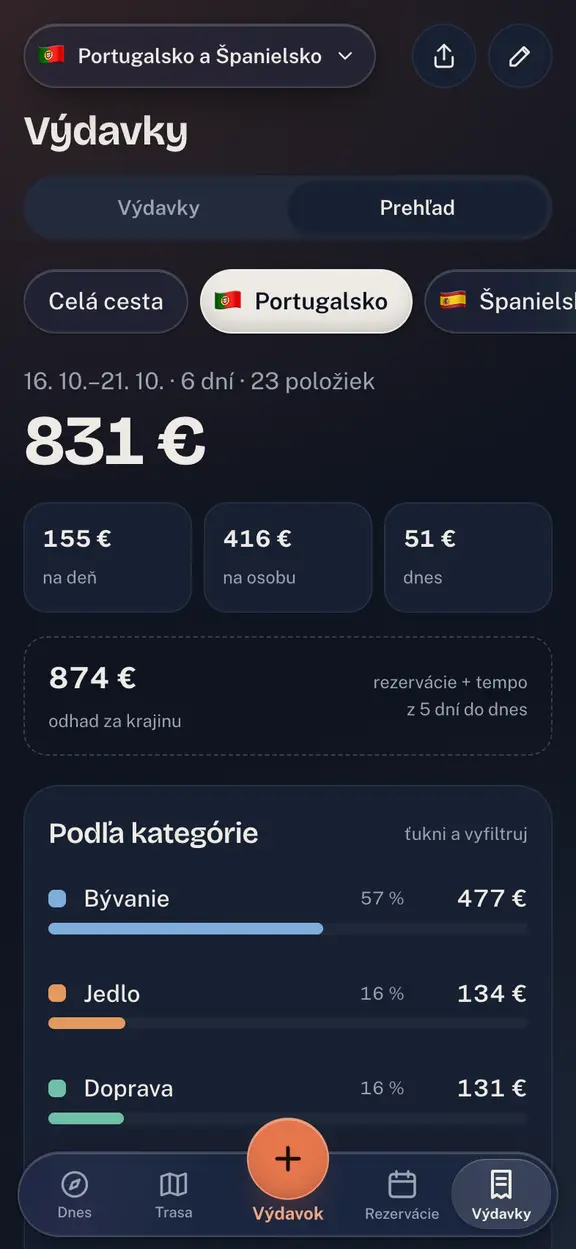
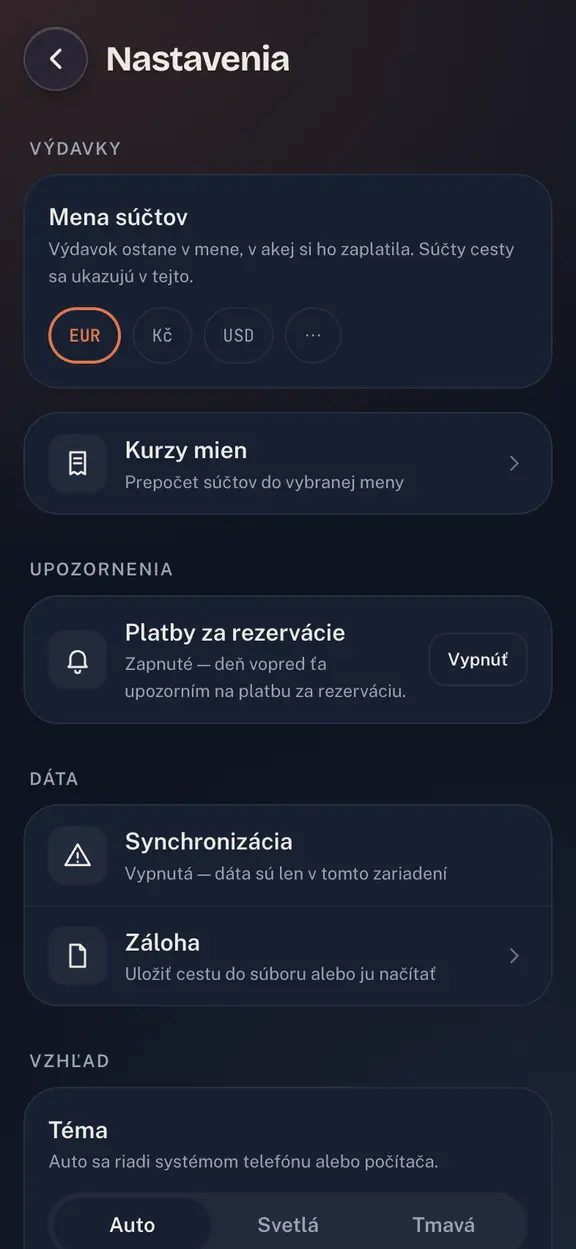
- Multi-currency expenses: the exchange rate is frozen when an expense is saved, so totals don't change with a new rate. Rates come from the ECB, from a public source for currencies the ECB doesn't quote, and a rate entered by hand from an exchange office takes precedence. If the rate is missing offline, the conversion is filled in once it arrives
- A deliberate data model: the transaction is the core and the trip is only context. Money is rounded per currency, dates are local, and anything derivable (totals, stops, dates) isn't stored. Decisions, and what I deliberately left out, are documented
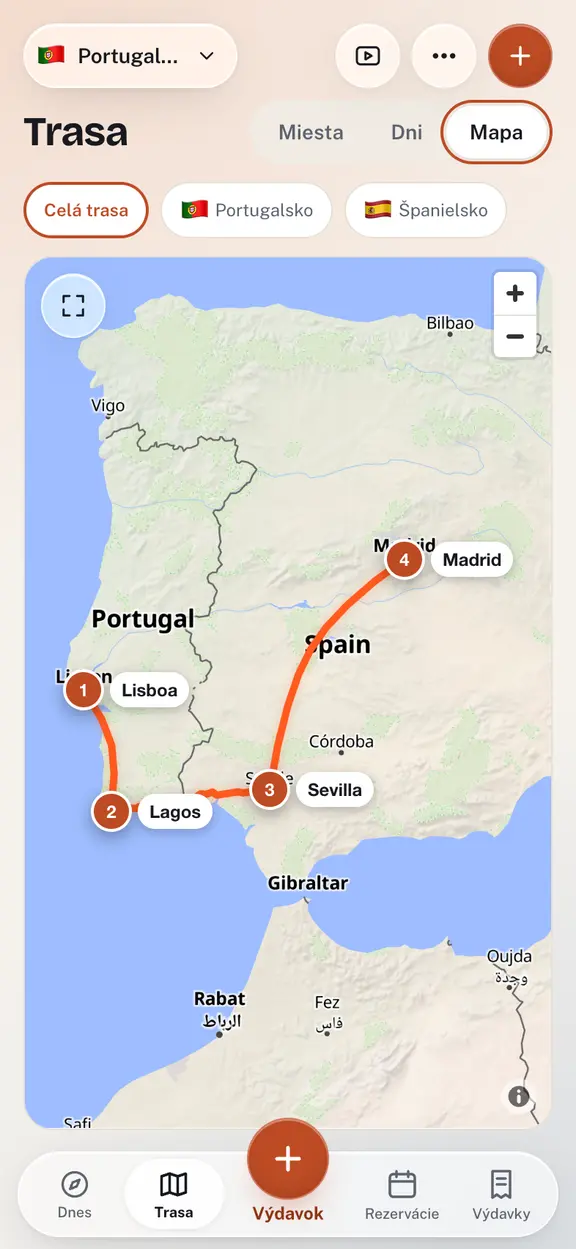
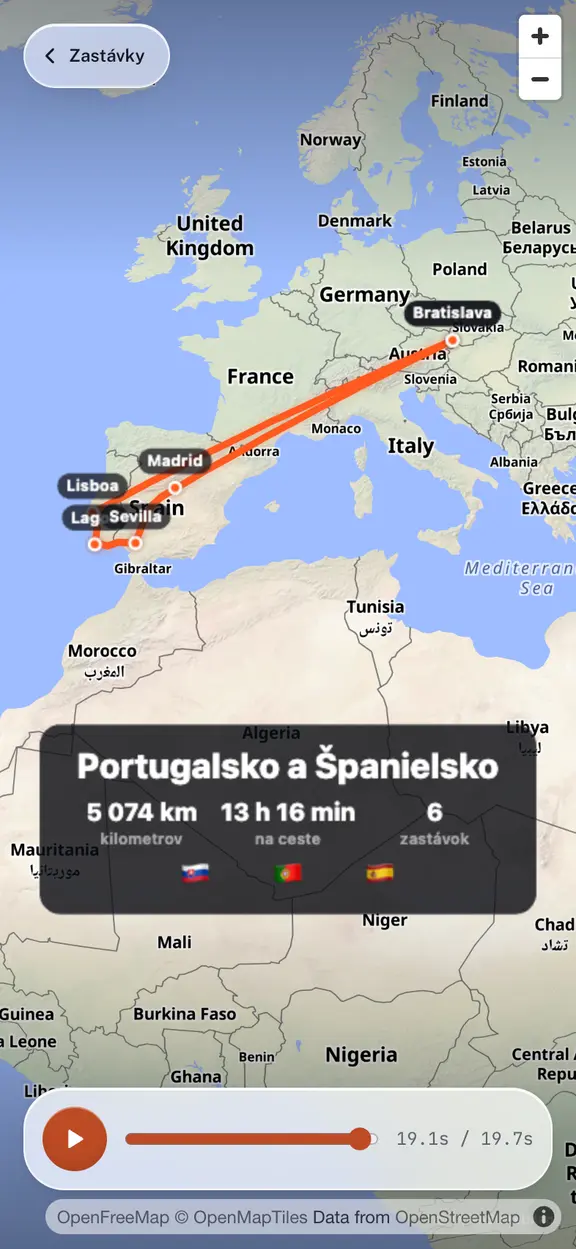
- Animated route videos: map stops come from the itinerary and bookings, so you enter a trip once. A video can cover the whole trip, one country or selected countries, rendered right in the browser
- Place photos: cities come from Unsplash, other places (sights, accommodation) from Wikimedia, matched by position through Wikidata, so a hotel doesn't get a random photo of the country. The author and licence are stored with the photo, and I can pick a photo by hand from both sources, where one source being down doesn't remove the choices from the other. The route summary builds a collage from them, next to the number of places, nights, countries, kilometres and the money spent
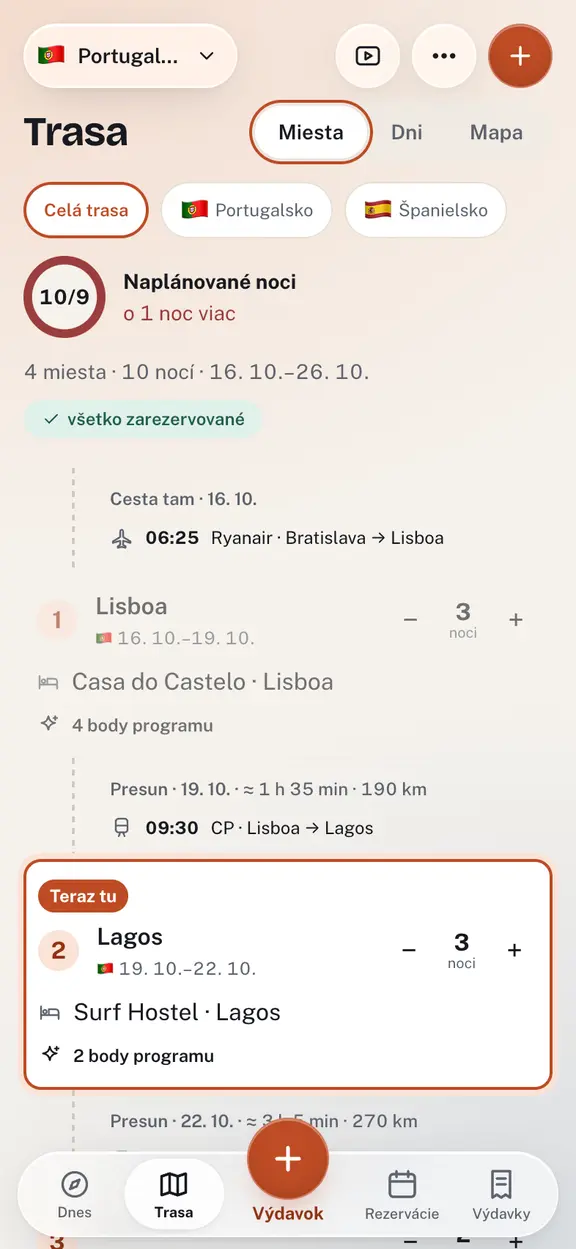
- Itinerary: places, nights and a programme per day. Places are found through a geocoder (Nominatim via a server proxy, since it requires a User-Agent), stops can be reordered by dragging, and a programme item with its own place further from the stop shows as a day trip, not as another stop on the route. A country I visit twice has two separate plans. A place with a locked arrival (for example the last night by the airport) keeps its date: places before it are planned up to it, nights nothing fills show as free, and if more nights are needed the plan says how much later it arrives instead of silently squeezing them
- Expense categories: two levels, stored as data rather than a fixed list
- Statistics across all trips: countries, modes of transport and money
- Story card: a shareable card with an expense summary can be generated from a section of the trip
- Imports and backup: flights from a Flighty export (CSV) and an itinerary from the Stippl app (JSON pasted from a chat, even several objects in a row or inside a code block), both with a preview before saving. Flights are grouped into trips and the ones already in the app are skipped on a repeated import, and Stippl replaces only the stops on the days the JSON covers. Expenses from CSV, backup export and import, and finding duplicate expenses
- Installable PWA: after the first online load it also works without a signal
- The map and the video encoder load lazily, only on the video page
- Shared logic (validation with Zod, money, itinerary) and the API contracts run in the browser and on the server, and the server handlers validate input with the same schemas. The server is split into feature modules and the Postgres schema changes through versioned migrations
- Password-protected, with a limit on failed sign-in attempts. Two users, one shared trip. The data model is ready for multi-user accounts, but doesn't have them yet
- Demo mode: on the sign-in page you can try the app with sample data, without sync(opens in a new window)
- Clean frontend: flat BEM in scoped SCSS, design tokens, dark mode, mobile-first. iOS-style page transitions (GSAP) and swiping back from the screen edge
- Over 70 test files in Vitest, with server sync tested against PGlite. CI in GitHub Actions (lint, typecheck, tests, build) and a Claude review of every PR with a prompt written for this project
If you'd like to see the code, email me and I'll give you access.
Write to me